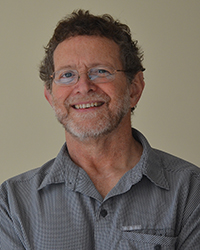
David T. Wasserman, one of the founding figures of philosophy of disability, died this past December. The following memorial notice is by Adam Cureton (University of Tennessee, Knoxville).
David T. Wasserman (1953–2025) was one of the founding figures of philosophy of disability, supporting its intellectual and institutional development and emphasizing its moral urgency and significance.
He helped to found the Society for Philosophy and Disability and served as its Vice-President for many years, working to build a community of scholars committed to thinking carefully together about disability across its ethical, political, metaphysical, and epistemic dimensions. David’s impact on our community is significant, especially his stubborn refusal to treat disability as a philosophical afterthought.
David’s philosophical gifts were obvious to anyone who read his work, talked with him, or (if you were lucky enough) argued with him. He was exceptionally intelligent, careful, and clear, but he was also imaginative, creative, broad in his outlook, and full of good sense and judgment. He certainly had strong opinions, but they were usually the product of patient thinking and a deep sense of how moral theory, policy, and ordinary life connect in disability contexts. His work on disability and reproduction, including prenatal testing, procreative responsibility, discrimination, and the nonidentity problem, helped set the agenda for debates that are still very much active and unsettled.
David did much to put philosophy of disability on the map; he did just as much to bring people into the conversation and to connect disability to long-standing questions about harm, justice, equality, and the good life. He was an exceptional mentor to younger scholars, giving generously of his time, eager to collaborate, constructive and supportive in his feedback, and deeply egalitarian in spirit. His style is hard to describe if you didn’t know him. David had a quick, dry, mischievous sense of humor, an uncanny ability to deflate pretension, and a bemused appreciation for the minor dramas of academic life. At NIH he liked to joke that his work put him “in the neighborhood of the nonidentity problem” and that his aim was to make it much harder for the rest of us to ignore it or think about it in careless ways.
For me, David was also one of my best friends, and I will miss him terribly. We were co-editors of the Oxford Handbook of Philosophy and Disability, a field-defining project that, in many ways, reflects his combination of breadth, generosity, judgment, and insistence that disability belongs at the center of philosophical reflection. The Society for Philosophy and Disability owes him a great deal; many of us owe him much more than that.
Comments
2 responses to “In Memoriam: David T. Wasserman (1923-2025)”
prinivil
prinivil
ursodiol
ursodiol